What happens when retirement lasts longer than you planned?
What happens when retirement lasts longer than you planned?
Retirement used to last ten to fifteen years.
You saved, you stopped working, and your pension and Social Security carried you through. The math was simpler because the timeline was shorter.
That timeline has changed. Today, a healthy 65-year-old couple has a nearly even chance that one of them will reach 90. Some will live well past that. Retirement is no longer a decade-long chapter. For many, it will last 25 to 30 years or more.
The financial industry responded to longer lives by encouraging people to save more and invest better. But saving more doesn’t solve the fundamental problem: nobody knows exactly how long their money needs to last. That uncertainty, the risk of outliving your financial resources, is called longevity risk. And it’s the most underaddressed challenge in retirement planning today.
Retirement used to last ten to fifteen years.
You saved, you stopped working, and your pension and Social Security carried you through. The math was simpler because the timeline was shorter.
That timeline has changed. Today, a healthy 65-year-old couple has a nearly even chance that one of them will reach 90. Some will live well past that. Retirement is no longer a decade-long chapter. For many, it will last 25 to 30 years or more.
The financial industry responded to longer lives by encouraging people to save more and invest better. But saving more doesn’t solve the fundamental problem: nobody knows exactly how long their money needs to last. That uncertainty, the risk of outliving your financial resources, is called longevity risk. And it’s the most underaddressed challenge in retirement planning today.
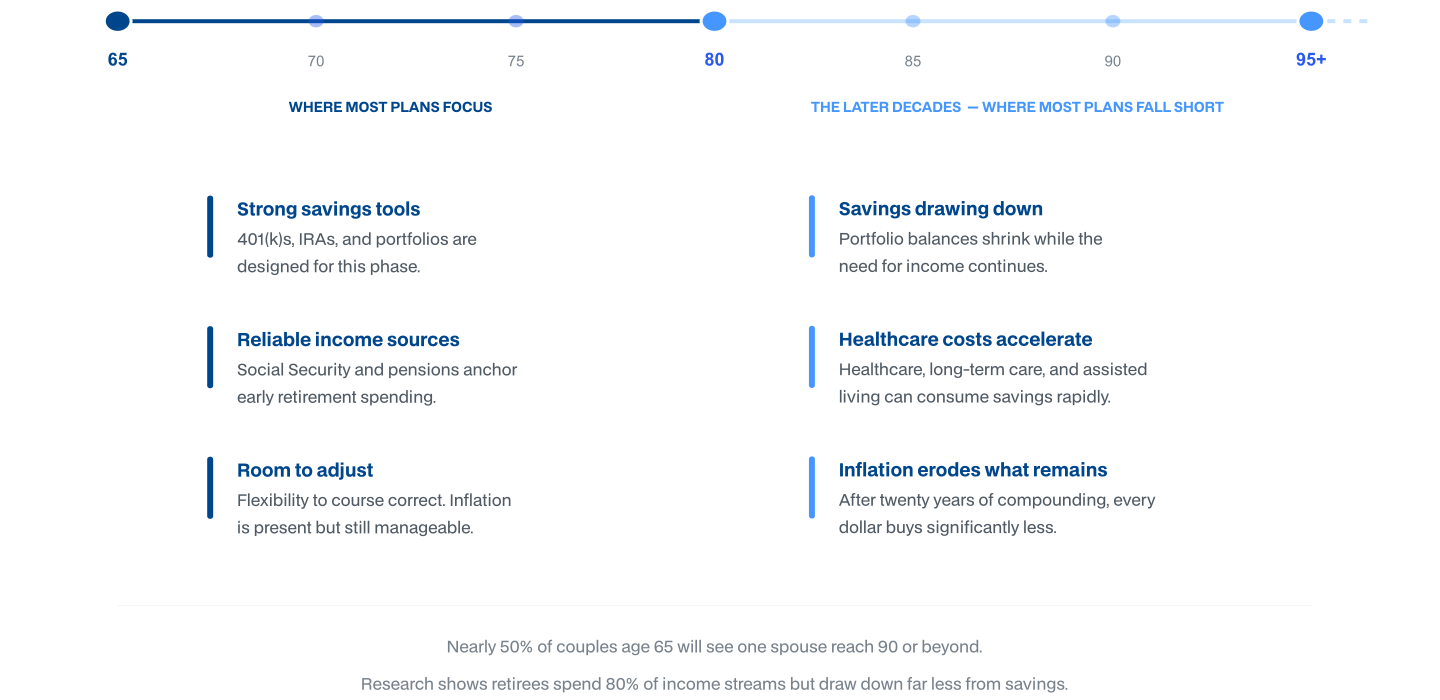
Longevity risk timeline
Ages 65 to 80
Where most plans focus.
65
70
75
80
Strong savings tools
401(k)s, IRAs, and portfolios are designed for this phase.
Reliable income sources
Social Security and pensions anchor early retirement spending.
Room to adjust
Flexibility to course correct. Inflation is present but still manageable.
Ages 80 to 95
The later decades — where most plans fall short.
80
85
90
95
Savings drawing down
Portfolio balances shrink while the need for income continues.
Healthcare costs accelerate
Healthcare, long-term care, and assisted living can consume savings rapidly.
Inflation erodes what remains
After twenty years of compounding, every dollar buys significantly less.
Nearly 50% of couples age 65 will see one spouse reach 90 or beyond.
Research shows retirees spend 80% of income streams but draw down far less from savings.
Longevity risk timeline
This is Longevity Finance
How do you make retirement income last as long as life does? Longevity Finance starts where traditional planning stops, at the point where savings are drawing down, costs are rising, and the tools most people rely on weren’t designed to reach.
Two ways to look at retirement planning
Longevity Finance
Traditional Planning
Primary focus
The later decades of retirement, where plans are least likely to have been stress-tested.
Wealth accumulation and early retirement distribution.
Starting variable
Time. How long retirement actually lasts drives every decision.
Returns. Portfolio performance drives the planning model.
Income design
Planning that accounts for the years when savings are drawing down and costs are rising
Withdrawals drawn from portfolio balances over time.
Planning Horizon
Plans for the possibility of reaching 90, 95, or beyond.
Often built around average life expectancy as the endpoint.
Spending confidence
Recognizes that uncertainty about lifespan is itself a barrier to spending in retirement.
Portfolio balances that retirees frequently underspend out of fear.
Two ways to look at retirement planning
Longevity Finance
Primary focus
The later decades of retirement, where plans are least likely to have been stress-tested.
Starting variable
Time. How long retirement actually lasts drives every decision.
Income design
Planning that accounts for the years when savings are drawing down and costs are rising.
Planning Horizon
Plans for the possibility of reaching 90, 95, or beyond.
Spending confidence
Recognizes that uncertainty about lifespan is itself a barrier to spending in retirement.
Traditional Planning
Primary focus
Wealth accumulation and early retirement distribution.
Starting variable
Returns. Portfolio performance drives the planning model.
Income design
Withdrawals drawn from portfolio balances over time.
Planning Horizon
Often built around average life expectancy as the endpoint.
Spending confidence
Portfolio balances that retirees frequently underspend out of fear.
EDUCATION
Planning for a longer life
Short, practical articles on what longevity risk means to you, and how to think about income that lasts as long as you do.
ARTICLE
The retirement risk no one likes to talk about: you, still here
Living longer is the biggest retirement risk for most investors. Does your plan assume you'll
Talk to an advisor who understands the full picture
If you’re approaching retirement or already there, and you’ve wondered whether your savings will truly last, you’re not alone. Longevity risk is real, it’s common, and it can be planned for. The best next step is a conversation with a financial advisor who understands the challenge and can help you build an income approach designed for a longer life.